
NFC vs QR: which one works better in a restaurant
Differences between NFC and QR for review requests in a restaurant: tap speed, phone support and why a single plaque should carry both of them.
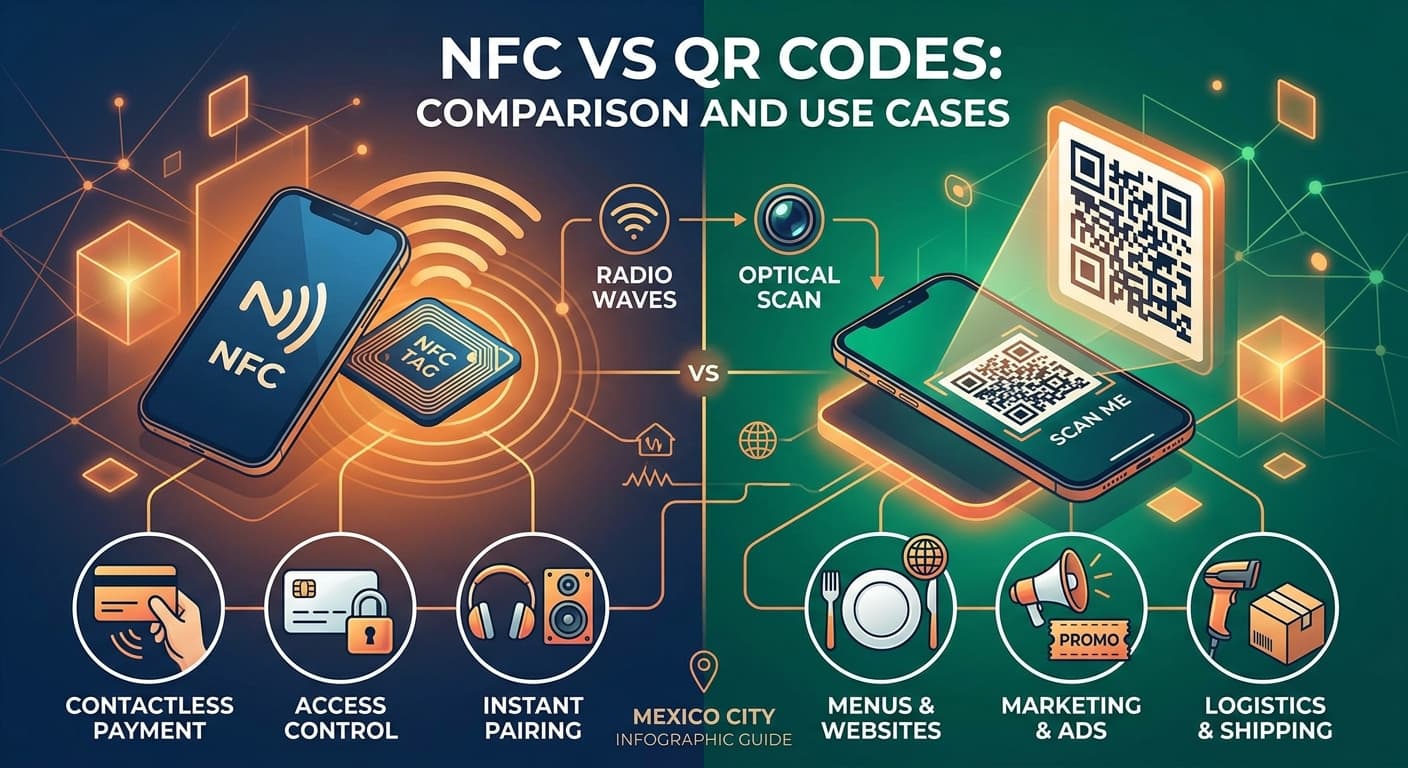
When we designed the plaques with both NFC and QR, the question we heard most was: "Why put both if people are just going to use one?"
The short answer is that they don't compete: each one wins in a different context. And the reason isn't technical, it's behavioral.
Why NFC wins at the table
At a table, the customer already has their phone in front of them. They're not actively using it, but it's there. When they see the plaque, the natural move is to bring the phone close: no opening the camera, no framing the code, no waiting. Just tap and the phone responds.
NFC works on all iPhones since the 7 (with iOS 14 or later, automatically) and on virtually every modern Android. The customer doesn't need to enable anything or install anything.
QR requires one extra step: open the camera, aim at the code, wait for it to focus. That's a few additional seconds. In practice, that's enough for a chunk of customers to leave it for later. And "later" usually means never.
Where QR catches up
Where customers move through quickly, the gap narrows. At a counter or a register, plenty of people already have the camera open, or are used to scanning to pay or to read a menu, so the QR stops being the long way round.
There are also contexts where QR is the only reasonable option: signs by the entrance, business cards, the back of a receipt. In those cases there is no defined surface for the customer to tap.
So why carry both?
Because some phones don't have NFC enabled, some older iOS versions don't read it automatically, and some customers habitually open their camera before trying to tap. The QR is the fallback that makes sure nobody gets left unable to leave a review.
A plaque with only QR asks everyone for the extra camera step, including the people for whom a tap would have been enough. A plaque with only NFC leaves out users with older phones or non-standard settings.
The practical conclusion
With both on the same piece, the customer uses whichever one feels natural without anyone explaining anything. That is the whole logic behind the review plaque with NFC and QR: not choosing for them.
If what you're missing isn't the technology but the moment to ask, the guide on how to ask for Google reviews without being pushy covers the other half of the problem.